If you’ve ever wondered what all the fuss is about regarding point of sale systems for auto repair shops, you’re not alone. The term gets thrown around like confetti at industry conferences, but what does it actually mean for your business? And more importantly, why should you care when you’ve got perfectly good cash registers and clipboards?
Here’s the uncomfortable truth: that “perfectly good” system is probably costing you more money than you realize. But before we get into the existential crisis of modern auto repair technology, let’s start with the basics.
What Is a Point of Sale System?
What is a point of sale system, really? If you ask most people, they’ll say it’s the thing that processes credit cards. That’s like saying a smartphone is just for making phone calls—technically true, but missing about 90% of what it actually does.
A traditional cash register is basically a calculator with a cash drawer. It adds things up and makes a ding sound. Congratulations, you’ve mastered 1970s technology.
A modern POS system for auto repair shops is more like having a really organized assistant who never takes sick days and doesn’t judge you for eating lunch at 3 PM. It handles appointments, tracks service history, manages inventory, processes payments, generates invoices, and provides detailed business analytics—all while you’re trying to figure out why Mrs. Johnson’s Honda is making that weird noise again.
How Does a POS System Work for Auto Repair Shops?
Understanding how a POS system works in the context of an auto repair shop requires looking at the entire customer journey, not just the “please insert your card” moment at the end.
The process typically begins when a customer calls to schedule an appointment. Your POS system can integrate with scheduling software to automatically create a customer record, check service history, and even suggest maintenance based on previous visits.
When the customer arrives, the system pulls up their complete service history, vehicle information, and any special notes. Like the fact that Mr. Smith always insists his car “just started making this noise” even though you’ve been telling him about that worn belt for six months.
As technicians work on the vehicle, they can update job status directly in the system. This real-time information helps service advisors communicate accurately with customers about progress and completion times. If additional work is needed, the system can generate estimates instantly and even send them to customers for approval via text or email.
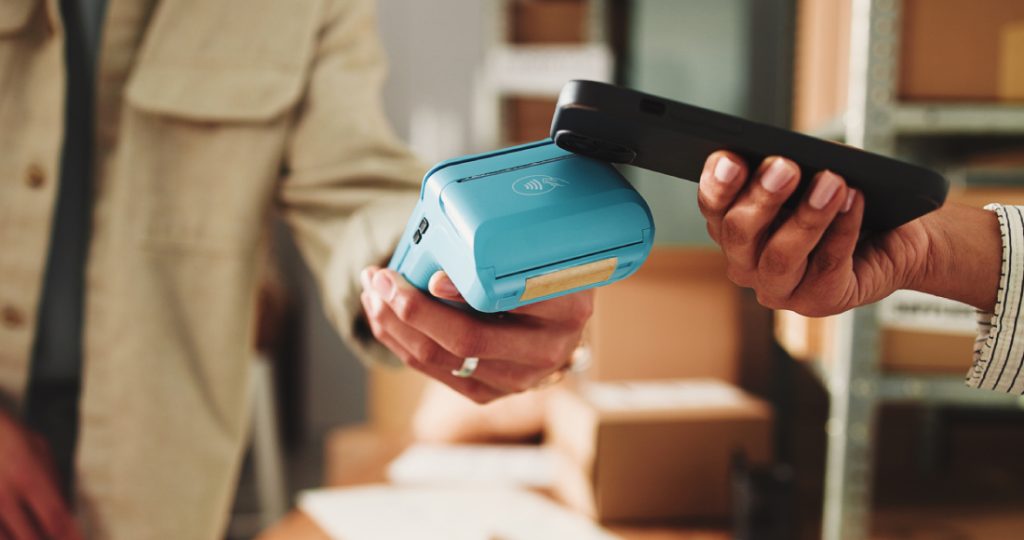
When the work is complete, the system generates a comprehensive invoice that includes labor, parts, taxes, and any applicable warranties. Payment processing happens seamlessly, with support for credit cards, contactless payments, and mobile wallets.
Key Components of a POS System for Auto Shops
The components of a POS system for auto repair shops go well beyond the basic hardware you might expect. Here are some of the key components:
- Customer Management forms the foundation of any good automotive POS system. This includes detailed customer profiles with contact information, vehicle details, service history, and preferences. The system should track multiple vehicles per customer and maintain comprehensive records of all work performed.
- Service and Labor Management capabilities distinguish automotive POS systems from generic retail solutions. The system needs to understand different labor rates for different types of work, track technician productivity, and handle complex pricing structures.
- Parts and Inventory Integration connects your POS system with your parts management, tracking usage in real-time and maintaining accurate stock levels. This includes handling special orders, core exchanges, and warranty replacements.
- Payment Processing capabilities must be comprehensive and secure. This includes traditional credit and debit cards, contactless payments, mobile wallets, and even financing options for larger repairs.
Why Is Point of Sale Important for Today’s Auto Repair Businesses
The question of why is point of sale important for modern auto repair businesses has several compelling answers, each addressing different aspects of running a successful shop in today’s “everything should be as convenient as ordering pizza” environment:
- Customer Expectations have evolved dramatically in recent years. Customers expect the same level of service and convenience from their auto repair shop that they get from Amazon, Uber, and their favorite coffee shop. A modern POS system makes all of this possible without requiring you to become a tech wizard.
- Operational Efficiency becomes crucial as labor costs rise and skilled technicians become harder to find than unicorns. Every minute spent on administrative tasks is a minute not spent generating revenue. POS systems automate many routine tasks, reduce paperwork, and eliminate duplicate data entry.
- Financial Management requires accurate, real-time information about your business performance. Traditional paper-based systems don’t provide the detailed insights needed to make informed business decisions. Modern POS systems offer comprehensive reporting that helps you understand which services are most profitable and where opportunities for improvement exist.
The reality is that modern auto repair businesses can’t afford to operate without proper POS systems. The efficiency gains, improved customer service, and better business insights more than justify the investment.
With Simpay’s automotive business solutions, you get all these benefits in a system designed specifically for businesses like yours. We understand that you didn’t get into auto repair to become a software expert, so we made it simple enough that you can focus on what you actually want to do.
Ready to join the 21st century? Speak with an expert at Simpay and discover how the right POS system can transform your business without requiring a computer science degree.